The Task
Frogparking's swing-arm parking gate needed a reliable safety system: a radar that could detect vehicles so the arm wouldn't strike them, close the gate quickly once a vehicle had cleared, and detect people so it would never strike them either. The brief was to evaluate whether radar from the Swedish company Acconeer could do this job, across the full ~3m sweep of the arm, and to build a prototype proving it out.
Process
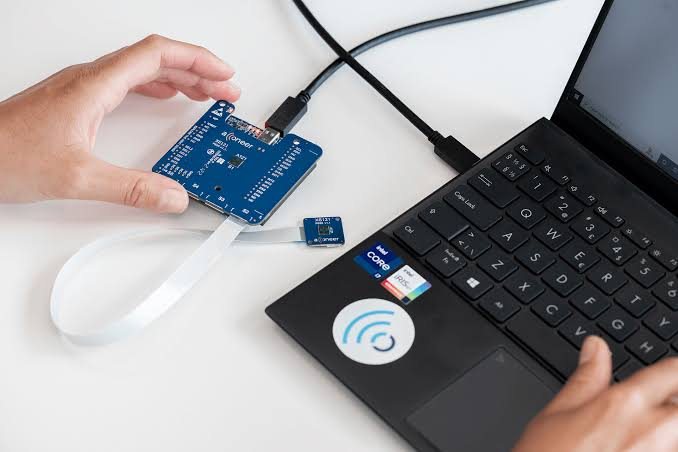
The work started with research into radar theory and Acconeer's A111/A121 hardware, followed by hands-on testing with an evaluation dev board across different lens configurations (Parabolic and Frenzel Zone Plate lenses, at varying distances) to characterise detection range and angle for both humans and vehicles — the two objects behave very differently, since vehicles are far more reflective than people.
Testing showed presence detection worked well for people, since it's sensitive to movement and could reliably pick them up entering the safety zone, while distance detection suited vehicles better, including when stationary. Custom reflectors were designed and tested to constrain each radar's detection arc to a known angle (around 30°), which made it possible to model exactly how many radar units were needed to cover the gate's full safety zone, and where.
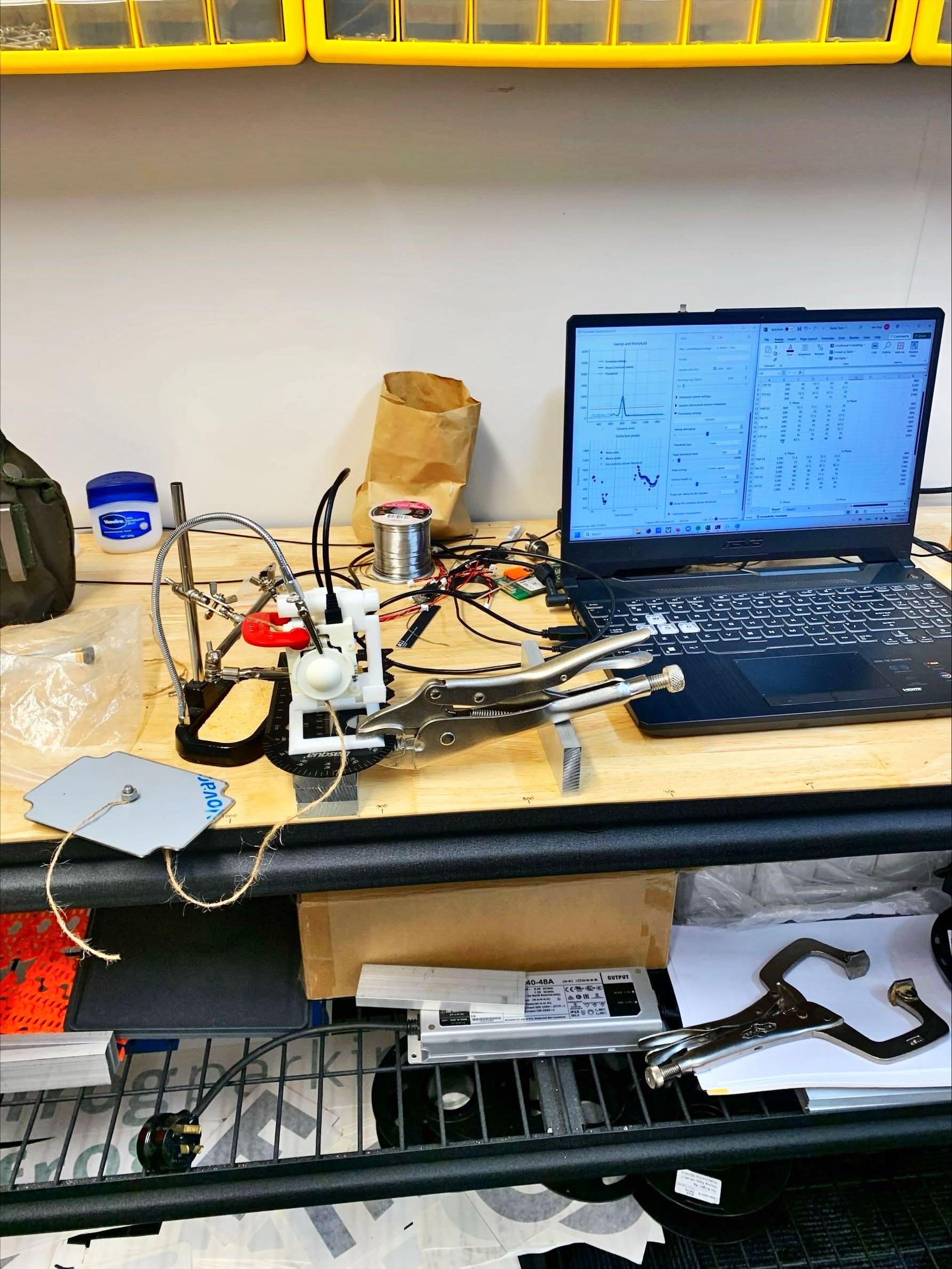
From there, a "radar ring" mount was designed and iterated (through several design revisions) to arrange multiple A121 units around the gate arm, with software written in Python to run all radars simultaneously. This was converted into a soft real-time, multi-threaded system, ultimately reaching cycle times of 0.07–0.08s — fast enough to support the required 10Hz update rate.
Results & Conclusion
Testing confirmed that neither the movement nor the vibration of the gate arm interfered with radar detection, and that both people and vehicles could be reliably detected within the required 3m zone once the radars were properly tuned and reflectored. The system could distinguish near, mid, and far positions along the arm's swing using multiple radar units, each covering a different part of the arc.
The most difficult zone was the outer edge of the safety area, where vehicles approach at shallow angles and produce weaker, less reliable signal returns — an area flagged for further work, along with testing across a wider range of vehicle materials. Overall, the investigation showed the Acconeer radar was a technically viable replacement for the existing sensor, with a working prototype and a clear set of next steps documented for whoever continued the project.
In the end, the project was not taken forward — Frogparking assessed that the engineering time needed to fully implement the system would cost more than the benefit it would deliver. Technically sound, but not the right call commercially at that time.